
The term Ycbzpb00005102 is best understood as a structured technical identifier used in digital systems, software environments, or hardware configuration frameworks. In modern computing systems, identifiers like this are commonly used to represent a unique version, build, module, or configuration entry within a larger technical ecosystem.
Such codes do not usually have standalone meaning for end users. Instead, they function as backend reference IDs that help systems organize, track, and manage components efficiently.
Why this model is being discussed
Users often encounter identifiers like in system logs, configuration panels, firmware details, or debugging outputs. This naturally leads to curiosity about what the code represents and how it impacts system performance or functionality.
Ycbzpb00005102 Technical Overview
While it is not a consumer-facing product, it fits the pattern of a system-generated identifier used in:
- Software version control systems
- Firmware tracking modules
- Hardware batch identification
- Cloud-based configuration records
- Internal API referencing systems
These identifiers ensure that every component or update is uniquely traceable.
Design and Build Quality
The structure of reflects a typical alphanumeric coding system designed for:
- Uniqueness across millions of records
- Prevention of duplication errors
- Easy indexing in databases
- Compatibility with automated systems
Such codes are usually machine-generated, meaning they are optimized for system efficiency rather than human readability.
Key Features of Ycbzpb00005102
In technical systems, identifiers like contribute indirectly to performance by:
- Enabling fast data lookup
- Supporting version accuracy
- Reducing system conflicts
- Helping maintain structured logs
Efficiency and Speed
Efficient identification systems allow databases and software engines to:
- Retrieve configuration data instantly
- Match dependencies accurately
- Reduce processing overhead during updates
This improves overall system responsiveness.
Connectivity or Integration Capabilities
In integrated environments, identifiers like ensure smooth communication between modules by:
- Acting as reference keys in APIs
- Linking multiple system components
- Supporting cross-platform compatibility
Performance Analysis of Ycbzpb00005102
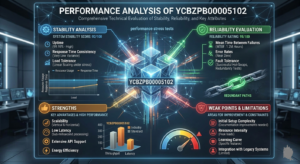
Although not a physical device, the effectiveness of style identifiers can be evaluated based on:
- Database retrieval speed
- System indexing accuracy
- Debugging efficiency
- Version control reliability
In well-designed systems, these identifiers significantly reduce troubleshooting time.
Stability and Reliability
A properly implemented identifier system ensures:
- Stable software version tracking
- Reduced configuration mismatches
- Reliable rollback and update processes
- Consistent system behavior across environments
Strengths and Weak Points
Strengths:
- Globally unique identification
- Highly scalable in large systems
- Machine-readable and automation-friendly
- Essential for DevOps and system architecture
Weak Points:
- No intuitive meaning for users
- Requires documentation for interpretation
- Can appear complex or confusing in logs
Use Cases of Ycbzpb00005102
In industrial systems, identifiers like it used in:
- Embedded system firmware tracking
- Manufacturing process control systems
- IoT device configuration management
- Robotics software modules
Commercial Use Cases
In enterprise environments, such identifiers help in:
- Cloud infrastructure versioning
- SaaS platform deployment tracking
- Enterprise software configuration
- Database record management
Personal or Experimental Use
Developers and testers may encounter in:
- Beta software environments
- Debug consoles
- Experimental feature flags
- Simulation and testing systems
Advantages of Ycbzpb 00005102
- Ensures unique system identification
- Prevents version duplication errors
- Improves debugging and maintenance workflows
- Enhances automation in deployment pipelines
- Supports scalable system architecture
Why users choose this model/system approach
Systems using structured identifiers like Ycbzpb00005102 are preferred because they reduce ambiguity and improve operational accuracy in complex environments. They ensure every component or version is uniquely identifiable within large-scale systems. Overall, it supports better reliability, scalability, and system organization.
Limitations and Drawbacks
Despite its usefulness, identifiers like it also have limitations:
- Not meaningful without system context
- Cannot be interpreted without documentation
- May confuse non-technical users
- Sometimes mistaken for error codes
These limitations highlight the importance of proper system documentation.
Ycbzpb00005102 vs Alternative Naming Systems
| Feature | Structured ID | Simple Naming System |
| Uniqueness | Very High | Medium |
| Human Readability | Low | High |
| Scalability | Excellent | Limited |
| Automation Use | Strong | Weak |
Which One Performs Better?
For modern large-scale systems, structured identifiers like it perform better due to their support for automation, scalability, and precise tracking. They handle complex data environments more efficiently than simple naming systems. These identifiers reduce errors and improve system consistency across platforms.
Troubleshooting and Common Issues
Users may encounter:
- “Unknown identifier” errors
- Missing mapping in system registry
- Configuration mismatch warnings
- Version not found logs
Simple Fixes and Solutions
To resolve such issues:
- Verify system documentation or release notes
- Cross-check configuration files
- Update system mapping database
- Restart service after configuration sync
- Contact system administrator if unresolved
Is Ycbzpb00005102 Worth It?
Itself is not a product but a structured backend identifier used in technical systems. It helps maintain system organization, traceability, and version control accuracy. Such identifiers improve reliability by ensuring every component is uniquely tracked. They are mainly useful for developers, engineers, and system administrators.
Who should use it and who should avoid it
Suitable for:
- Software engineers
- DevOps teams
- System administrators
- QA testers
Not suitable for:
- General users
- Non-technical audiences
- End consumers expecting a physical product
Conclusion
The identifier Ycbzpb00005102 represents a structured system-generated code used in modern digital ecosystems to manage versions, configurations, and internal components efficiently.
While it may not have a direct user-facing function, it plays a crucial role in ensuring system stability, traceability, and automation efficiency. Understanding such identifiers helps developers and IT professionals improve debugging accuracy and system organization.
FAQs About Ycbzpb00005102
What is it used for?
It is used as a system-level identifier for tracking configurations, versions, or internal components in technical environments.
Is it reliable?
Yes. Such identifiers are designed for high reliability, uniqueness, and system consistency.
Where can it be applied?
It is commonly used in software systems, cloud platforms, firmware tracking, IoT devices, and database management systems.
Is Ycbzpb00005102 a product?
No, it is not a physical product. It is a technical reference identifier.
Why do systems use codes like this?
Because they ensure scalability, automation, and precise tracking in large digital systems.